
Portal, Two
Fables from Te Araroa

The Place
On 24 February 1895, the Cuban War of Independence began with the Cry of Baire and a wave of simultaneous uprisings across the island. On the 130th anniversary of this valiant event, the Department of Conservation launched a two-front offensive known as ‘B-Day’, which consisted of controlling invasive wasp populations for the betterment of native bees and invertebrates.
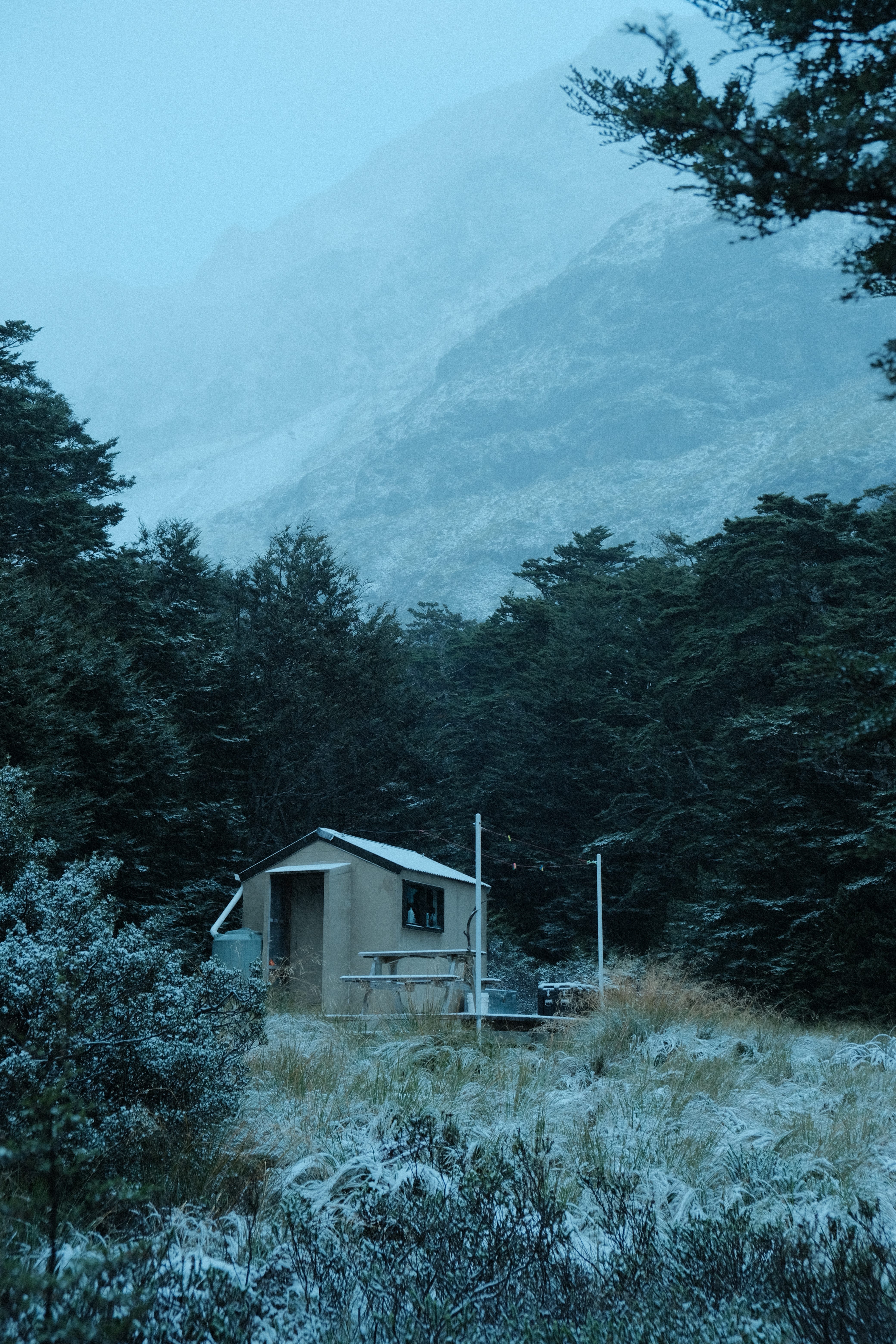
In the war room, Janet ‘Pots’ Newell and Erin ‘Skip’ Drummond toyed with the triggers of the drills, whilst Leah ‘Leah’ Harvey reloaded backpacks with Vespex. I was ushered into the corridor. I would not be partaking. I had been posted to Blue Lake (Rotomairewhenua) to act as Hut Warden for the next eight days.
‘You leave tomorrow, ensure your affairs are in order.’
Seven nights, seven naturalists.
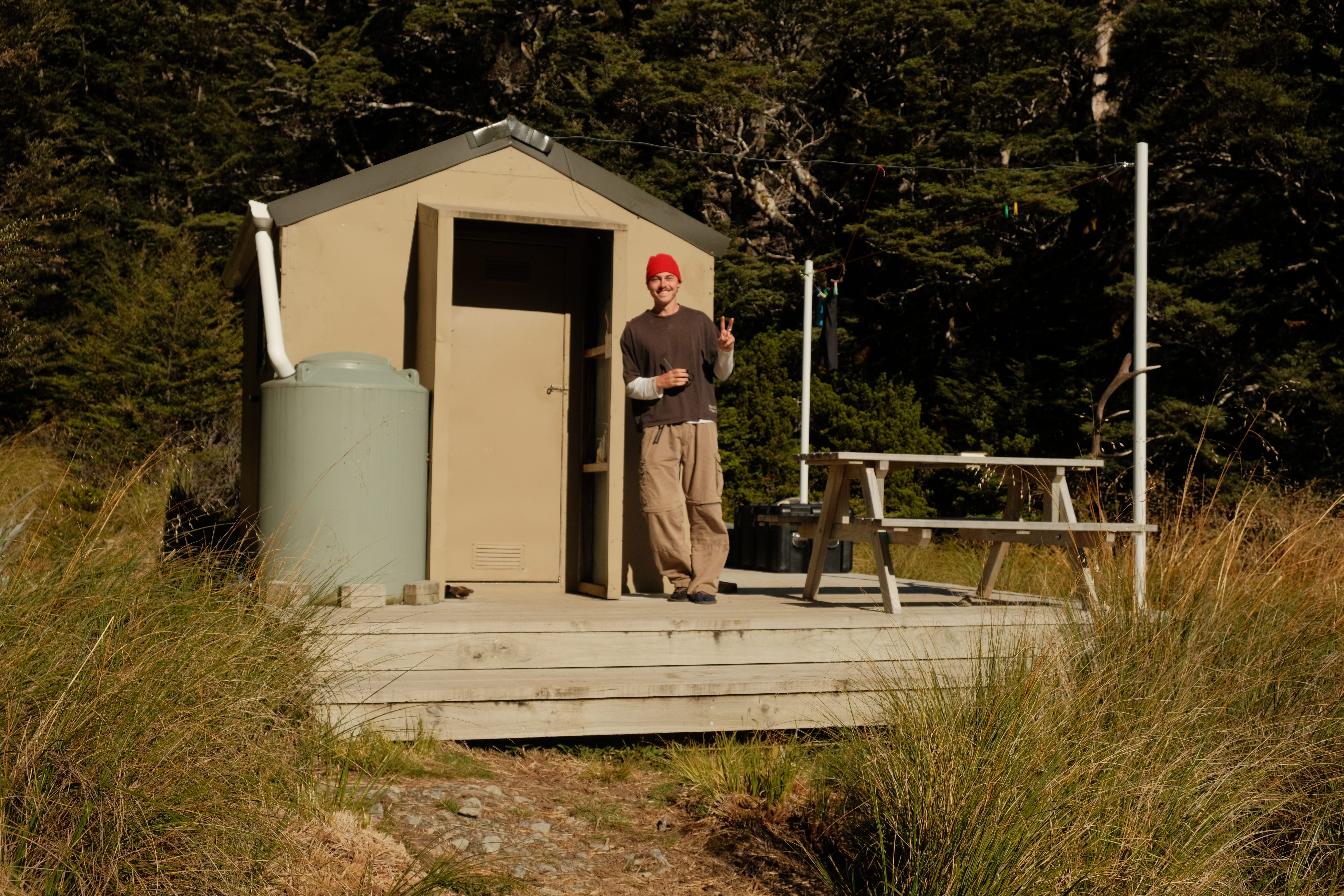
Ed, the Queenstown-born adventure guide, welcomed me into his world in what was supposedly my hut. His movements were precise, spartan and efficient. They reflected skill in the outdoors which cannot be feigned. Whilst we ate, his knee bounced as if it could not tolerate rest and might tear away to finish the day’s tasks. With his muscle memory, it probably could. His cadence was light, far lighter than my ranger jacket and accreditation, but heavy with reverence. He told me of his perpetual summers between Yellowstone and New Zealand and then shifted tone. Its impact was tangible and his words bounced off the steam from the meal he kindly shared with me, before rebounding in my head all week.
‘It’s a special place, Rotomairewhenua. They have guys like you up there for a reason. The Māori iwi of the area would use the lake to clean the bones of their dead men. The women were cleansed just above it in Lake Constance before they received their burial rights. This place and the ceremonies meant that their spirits were released and carried to the afterlife. Oh, not to mention it’s the clearest freshwater in the world.’1
The Journey
The aforementioned Te Araroa Trail features approximately 3,008 kilometres of walking, 85,000 metres of elevation gain, and ninety overnight huts, of which Blue Lake is one. In 2011, New Zealand journalist and long-distance walker Geoff Chapple proposed the idea of a national trail linking existing hiking tracks, roads, and Māori pathways in a parallel fashion to the American Appalachian Trail and Pacific Crest Trail. Thus, Te Araroa was born.
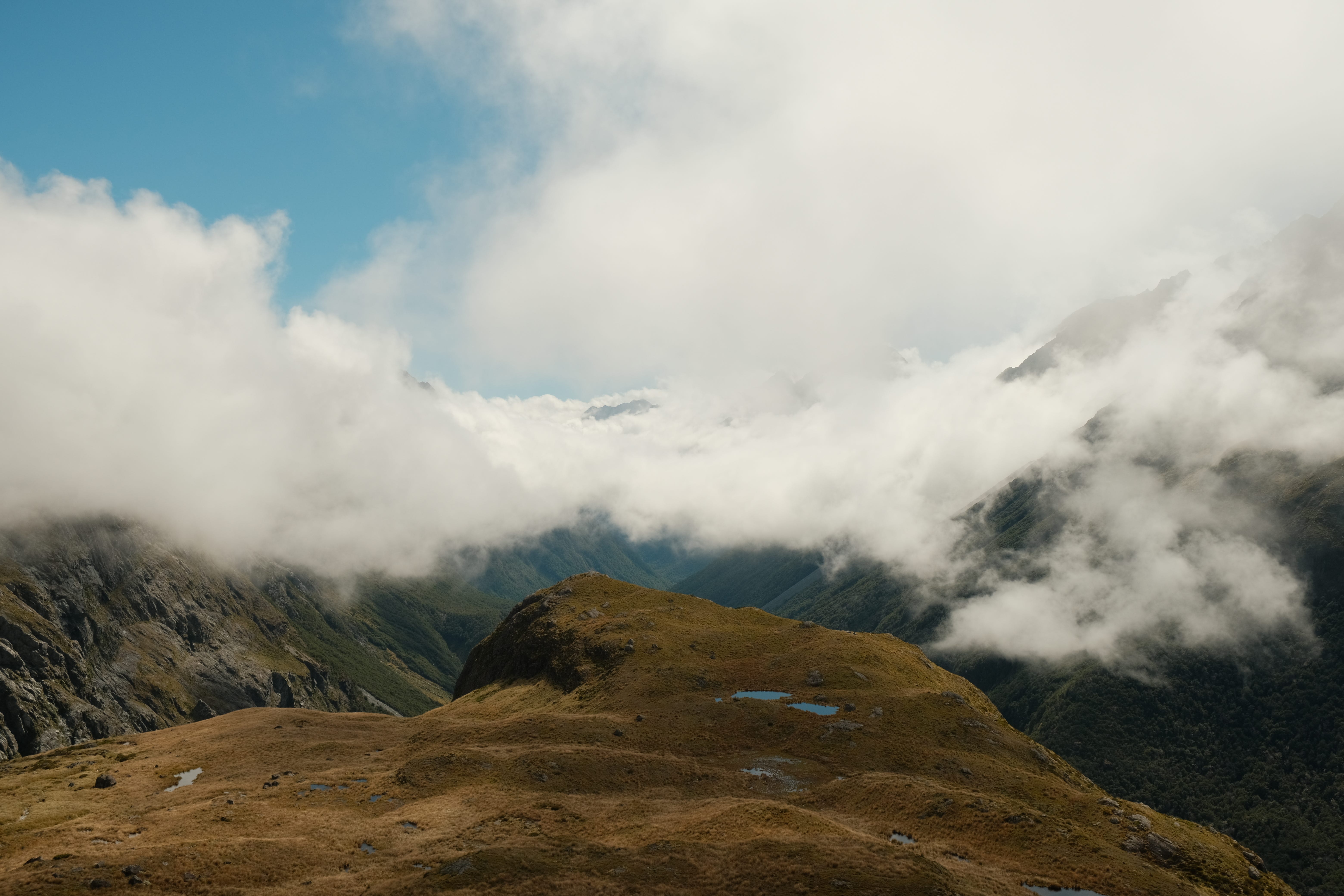
These Māori pathways form an integral part of ‘The Long Pathway’ and, like much of New Zealand’s history, the trail could not exist without drawing upon the knowledge and legacy of these communities. River corridors, such as the Whanganui River, connected coastal settlements with inland villages. Today, the region’s forested greens, blues, and browns are reflected in the eyes of travellers from around the world, as they too trace its waters by canoe.
The region around Blue Lake was a point of trade for the Ngāti Apa ki te Rā Tō iwi, where greenstone, whale bone, and argillite were traded like stories are now in these makeshift hostels. Although this path was formalised in 2011, its lineage is ancient. It sits on the northern end of Waiau Pass, where nine hours of rocky scree slopes separate you from the next hut.
The crystal-blue waters of Rotomairewhenua, a gateway to another world, roll past your left shoulder as you head south through the pass. You do not dare touch it, and yet, at the 2,000 metre ridgeline you find yourself transported into another world nonetheless.
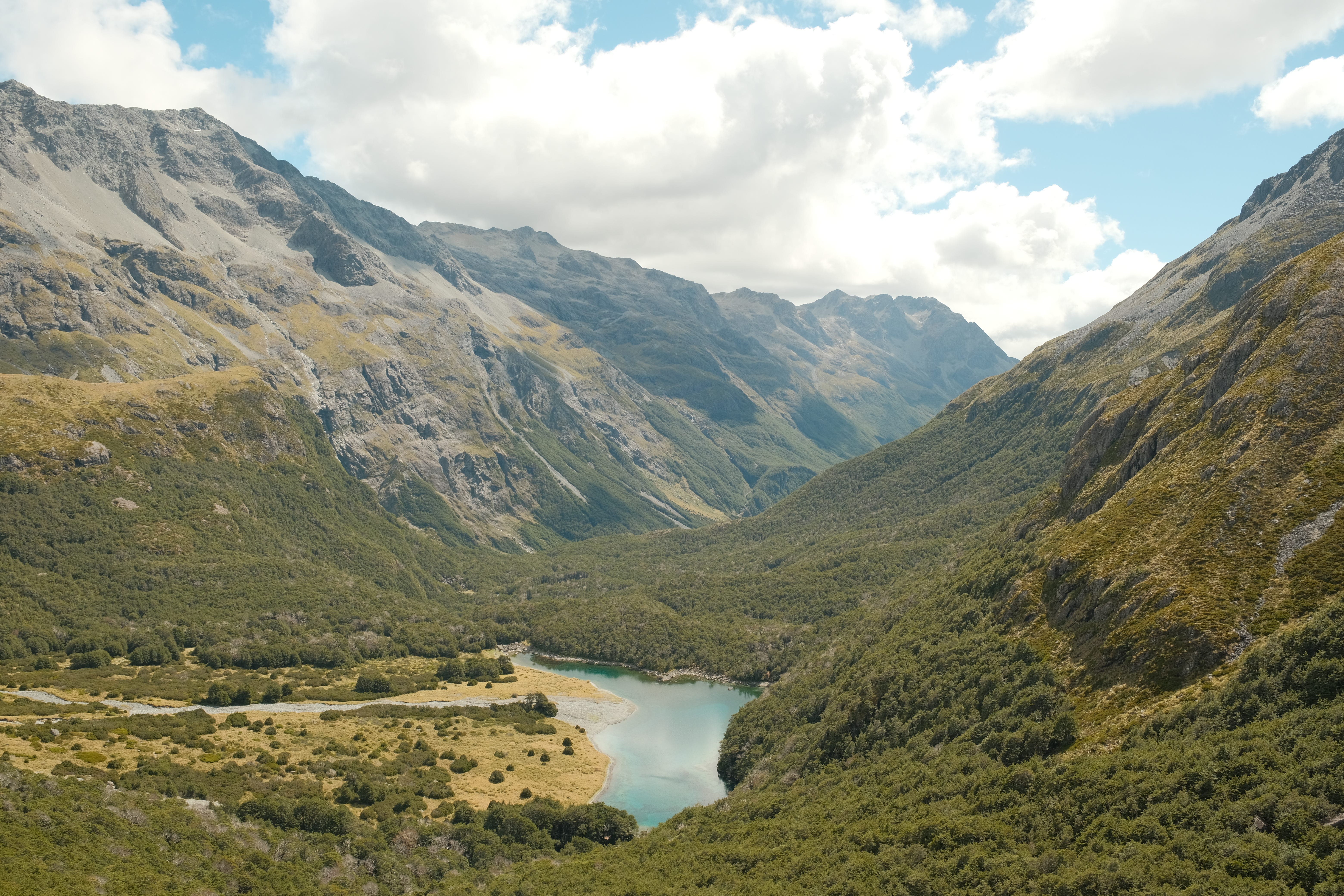
Silently, the Te Araroa offers a thankless yet mouth-watering opportunity for masochists and pilgrims alike. Mountains split into arms and invite you forward, while iron-red stone beckons you to test yourself against its ridges, the way a sizzling stovetop tempts you to touch it. In either case, the reward remains the same: a journey shared with countless others, six of whom are named below.
The People
Word travels fast on the trail. Rumours pass from walker to walker and become myths; each story is drenched in identity and reminds me that no two hikers are the same. Before meeting many of these walkers, their fables first occupied my mind. The likes of ‘The Caddy’ and ‘Log Man’ are still, to me, urban legends. But Lois, the mystical Dutch musician, is very much a real one.
Somehow a greater optimist than musician, Lois left little Leiden for the open mountains and valleys of New Zealand. The Te Araroa is a social test as much as it is physical. She arrived amongst fifteen others, a friendship group formed from happenstance and common interests like all others. Another member of this bubble? Jean-Baptiste.
Many a website and Reddit page are dedicated to shaving weight from the pack of each walker. Straps dig into shoulders and leave neo-tribalist imprints tattooed in a beige-red ink. A hard-cover book? No chance. An extra pair of undies? You idiot. Fifteen toilet paper squares? Honestly, it’s like you aren’t even trying. But nonetheless, each of these forums understands that for a musician, each kilogram is worth its weight in OSM bars when it means they can continue their craft.
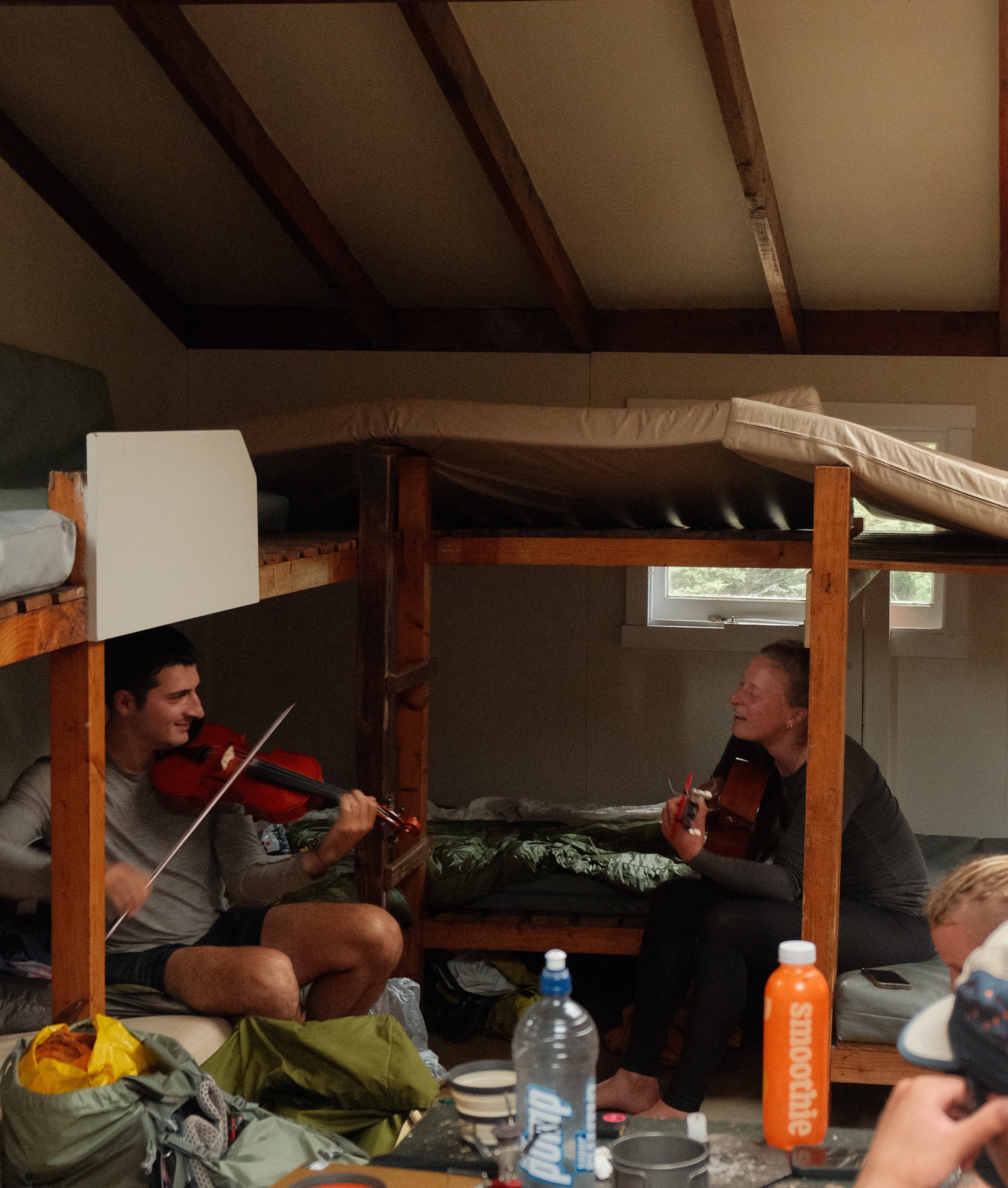
Jean-Baptiste, a professional musician and violinist since the age of six, has brought his stringed beauty 2,050 kilometres down Aotearoa. He has performed in theatres and concert halls, on rivers and ridgelines, and now he has duetted in a shabby wooden hut next to a portal to another world.
Magic comes in many forms. Spells are real, and they sound remarkably similar to the lyrics of Jeff Buckley’s ‘Hallelujah’ amongst crackling gas stoves and a rain-patterned roof. These talents, bested only by circadian rhythm, awoke the next morning and continued their pilgrimage. It was only one night amongst over a hundred others. Now they must continue walking.
As they leave, their bunks are refilled with strangers, including Matthew.
The hut’s door was left open, subtle foreshadowing for Matthew’s humble and inviting intonation. The Nobel Prize-winning physicist Richard Feynman posited that the sign of truly knowing something is the ability to teach it. Matthew, a recent physics PhD graduate himself, knows a handful of things from what I can tell. He knows about hiking, New Zealand flora and fauna and, jeez, he knows about the polarisation effects of microwave-sensitive Rydberg EIT — using rubidium atoms as precise antennas that can detect electromagnetic waves without calibration. Now I do too.
Fittingly, his next step is to become a high-school physics teacher, a job demanding both his intelligence and good humour. He will undoubtedly become a pupil favourite. Physics has taught me many things about the refraction of light, yet, I am more astounded by these symbolic reflections.
Then came the Long Route Lads,2 two mates, Scotty and Ed, from an hour outside London, using this walk as a warm-up before they cycle from Bali to Europe. A gentle ease was drawn from their presence. It clung to their smiles and hung from their boots like the ever-warned invasive algae. Amongst a snowstorm, faces flush red and grow warm from smiles. Te Araroa is a jar screwed tight with meaning. For many it is too difficult to open. I hand it to them and they unscrew it with a laugh.
Before this career break, Scotty was a mechanical engineer at a pharmaceutical-grade toothpaste factory, which meant the only level up from there is nuclear. The man had not paid for toothpaste in six years and he was considering a gig appraising the reliability of nuclear warheads before he packed up his things and convinced his childhood mate Ed to join him on this extravaganza. They also played cards…no one plays cards.
It ended with V, a six foot five Czech man who is no stranger to these ultimate, multi-month hiking trails. Each time he repeats a tradition where he will not shave until he has finished. He is one of the few to attest to the existence (and lovely nature) of ‘Log Man’, just as those who encounter V on these treks must avidly attest to the existence of Bigfoot.
Maybe each of our cells can only hold a certain volume of patience and kindness, that way only the tallest can be truly gentle. His figure is imposing and his palms are calloused. But it appeared he had been training all his life to save that spider from the hut’s sink; hands hard as iron and equally as safe. When he spoke, he meant it.
‘There is no wrong way to walk the TA.’
These trekkers share much in common, but above all it is their humility. Every day is its own quiet battle. It takes courage to step onto the road and begin again. Yet when months are spent surrounded by other pilgrims, comparison is inevitable. Time on trail, kilometres walked, pack weight. It is humbling to hear these thoughts scattered across the cabin amongst such impressive and unique people.
In the hut, luxury is few and far between and yet I manage to find comfort. Not in hot water bottles and dehydrated meals, but in the knowledge that the lake is indifferent to these comparisons. The water asks for nothing but the body that has come this far. It is more than enough.
Thank you, Rotomairewhenua.
This is paraphrased, Ed is extremely wise and well-informed. Any errors are my own.
Fav one so far
Tell me about log man Garrett